
Our History
Over 40 Years

1984
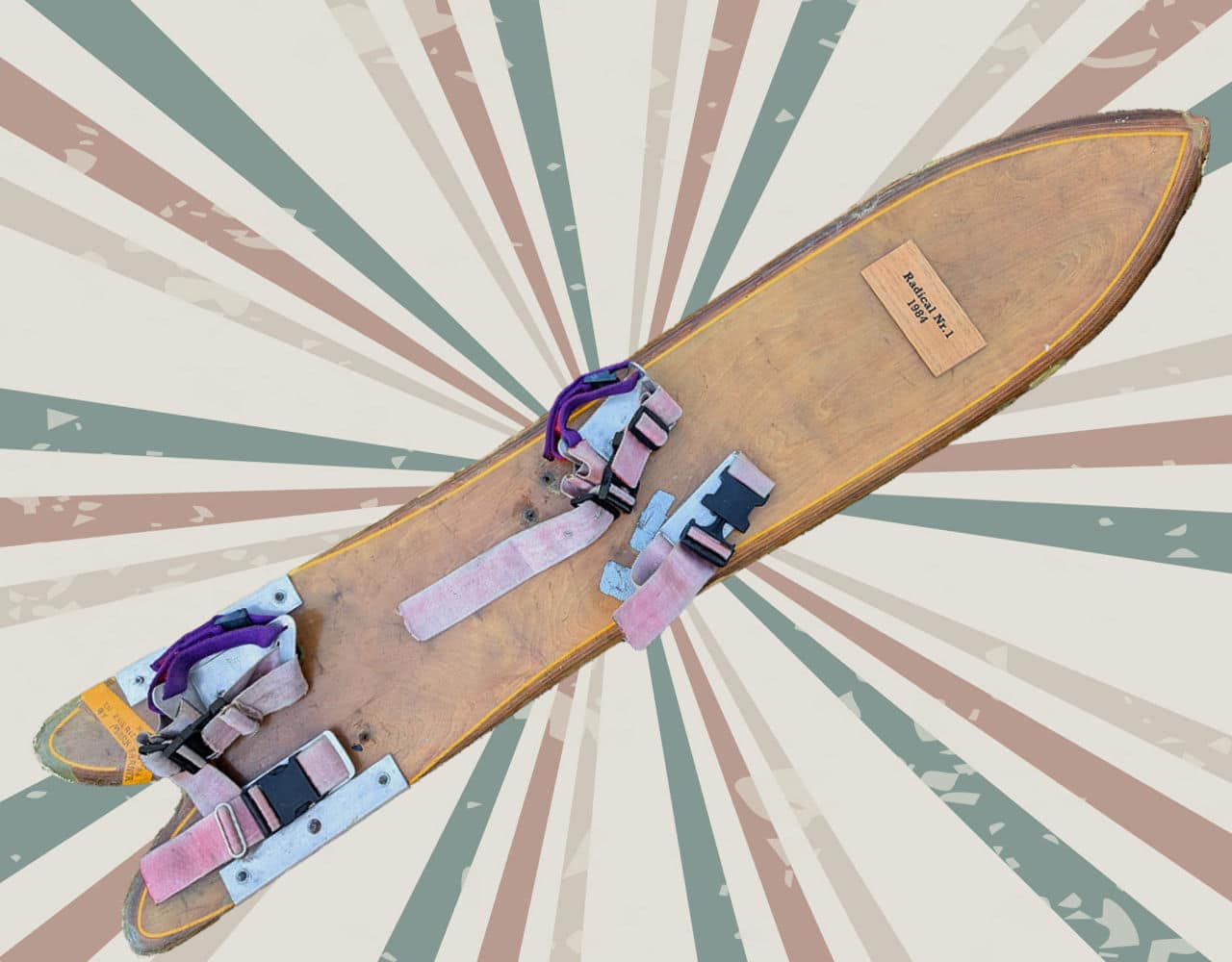
Radical No. 1
The Radical No. 1 from 1984, crafted by Mark Farner, was a milestone in the Swiss snowboarding scene.
Featuring a Finnish plywood core and a fiberglass-wood sandwich construction, it delivered outstanding stability. The purple-stained design with yellow pinstripes and lateral aluminum L-rails as fins made it unmistakable. It was ridden with Raichle leather mountaineering boots.
More than 200 people learned how to snowboard on this very board.
Necessity sparks invention
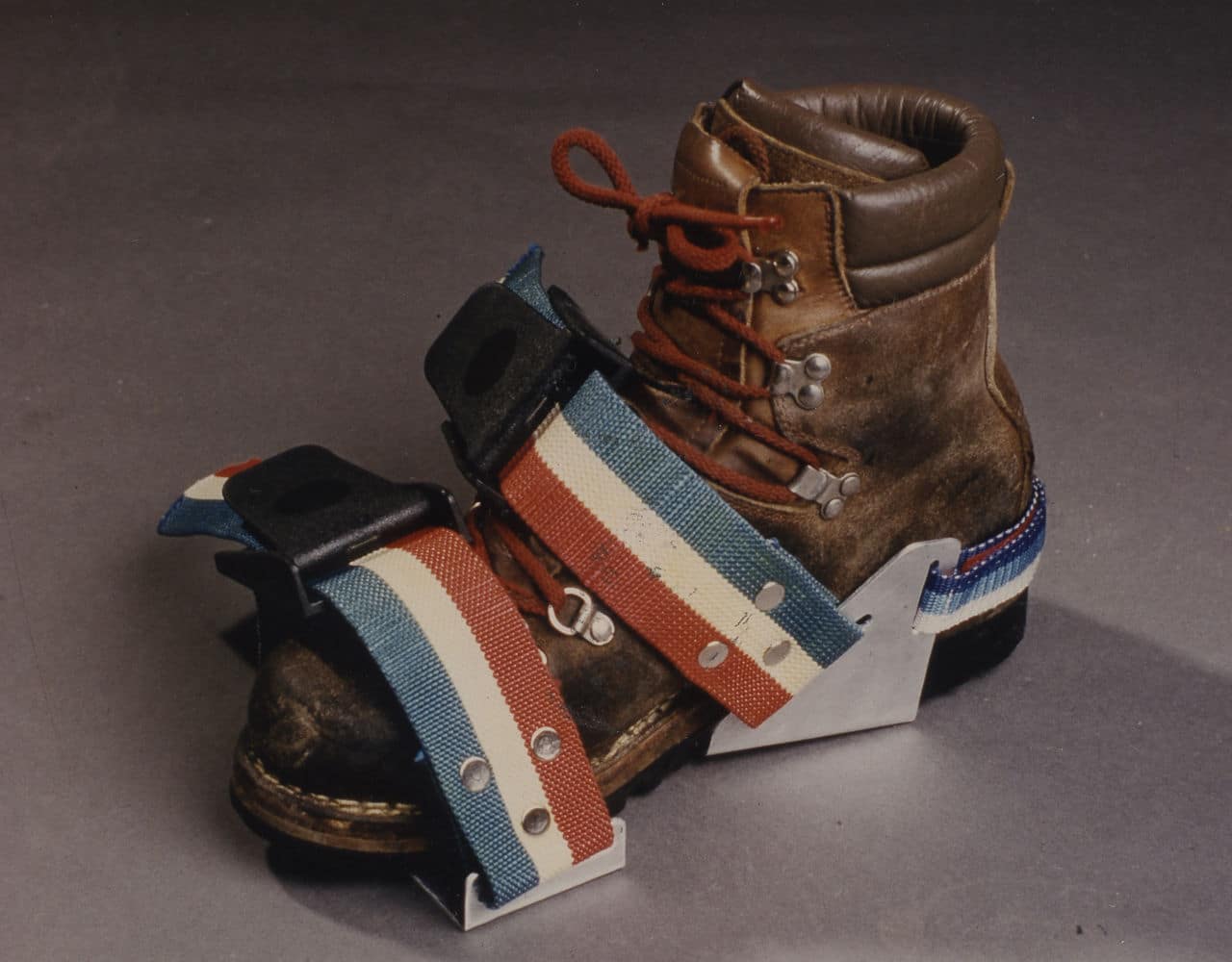
The snowboarding scene in 1984 was still in its infancy, and suitable bindings were almost impossible to find. Most riders used ski boots, which were far too stiff and prevented that coveted surf feeling.
The picture shows one of the first bindings made from aluminum and aircraft tie-down straps.
Team member Marco Franzoni then went on to develop a binding crafted from polyethylene sheets. These were heated in an oven up to their melting point and then pressed in a compact custom mold.
The Name Radical
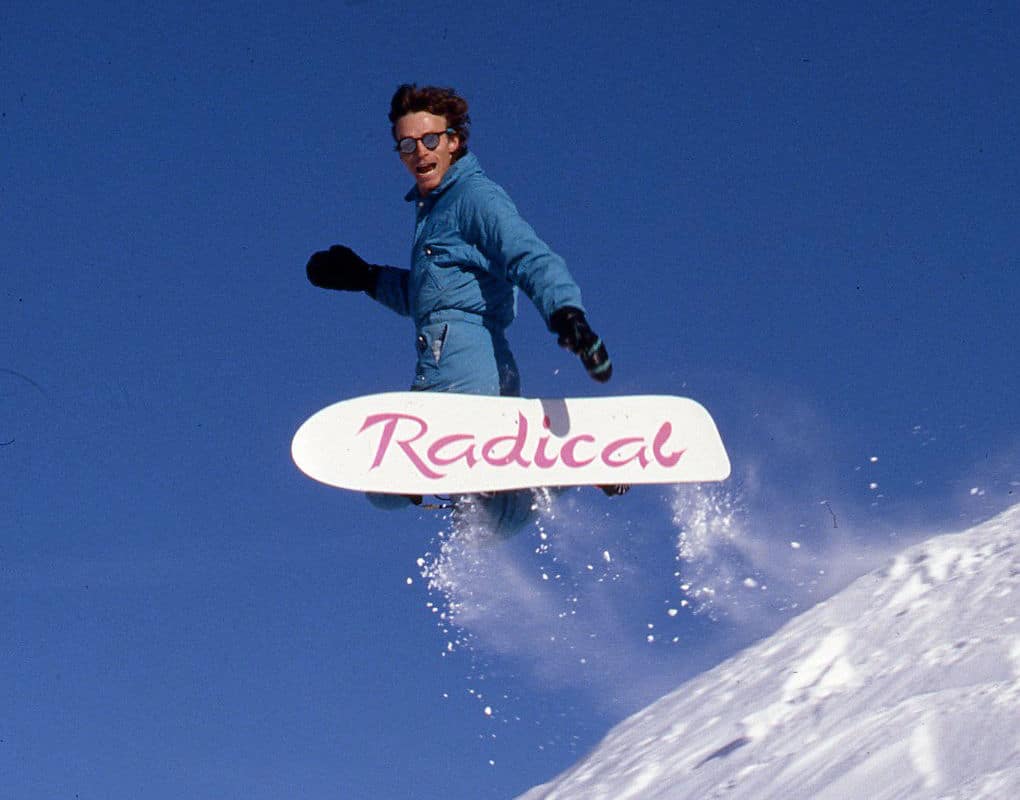
After taking the first run on his handcrafted board in December 1984, Mark Farner chose this name because the riding sensation was so close to surfing—a radical, deep-rooted experience.
The name reflects the Old English meaning of “radical” as “going to the root,” which aligned perfectly with Mark's vision of surfing deep powder. The Latin root of the word, “radix” meaning “root,” underscores this connection and stands as a symbol for the original concept behind Radical.
1985
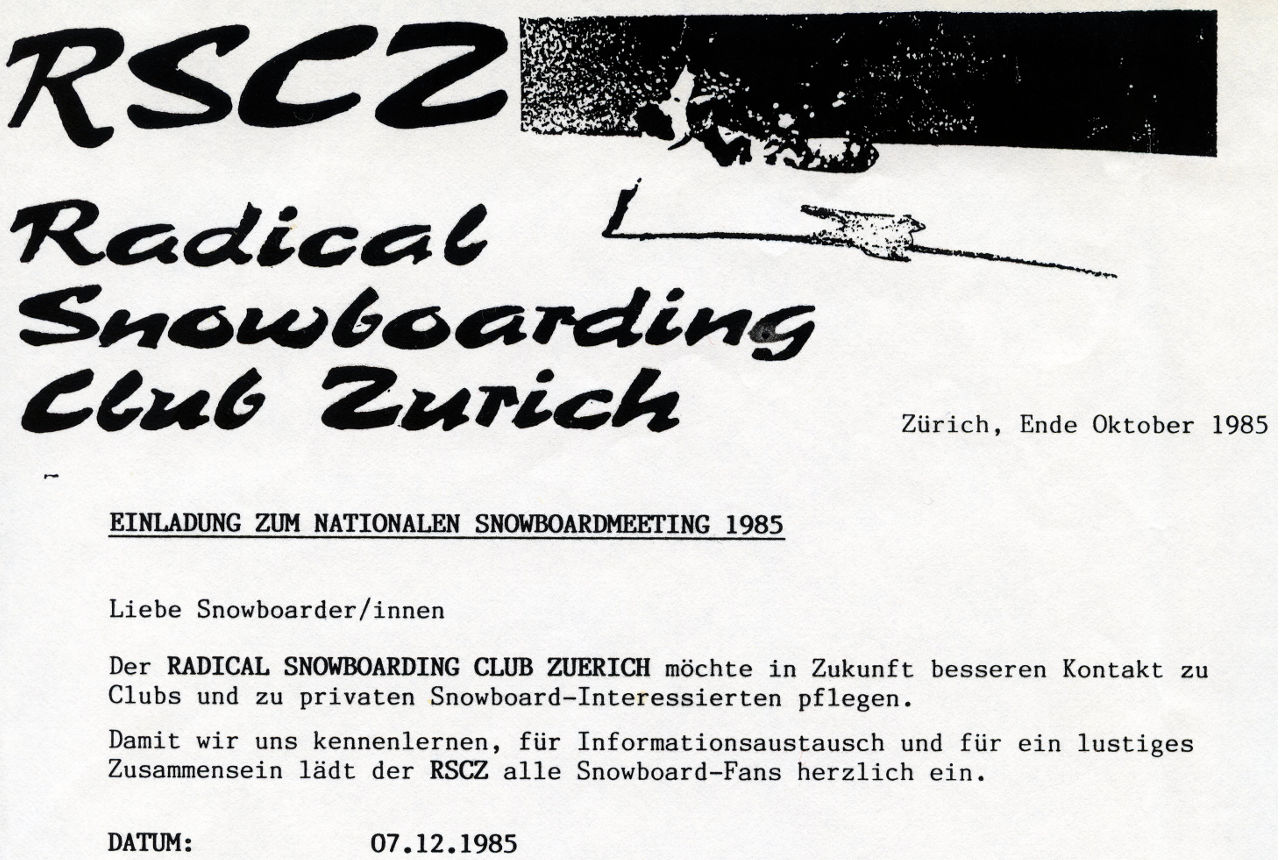
Radical Snowboard Club Zurich (RSCZ)
Mark Farner founded the Radical Snowboarding Club Zurich (RSCZ), recognized as the first snowboard club in Europe. The club was dedicated to promoting and growing the sport of snowboarding and organized training sessions for anyone interested.
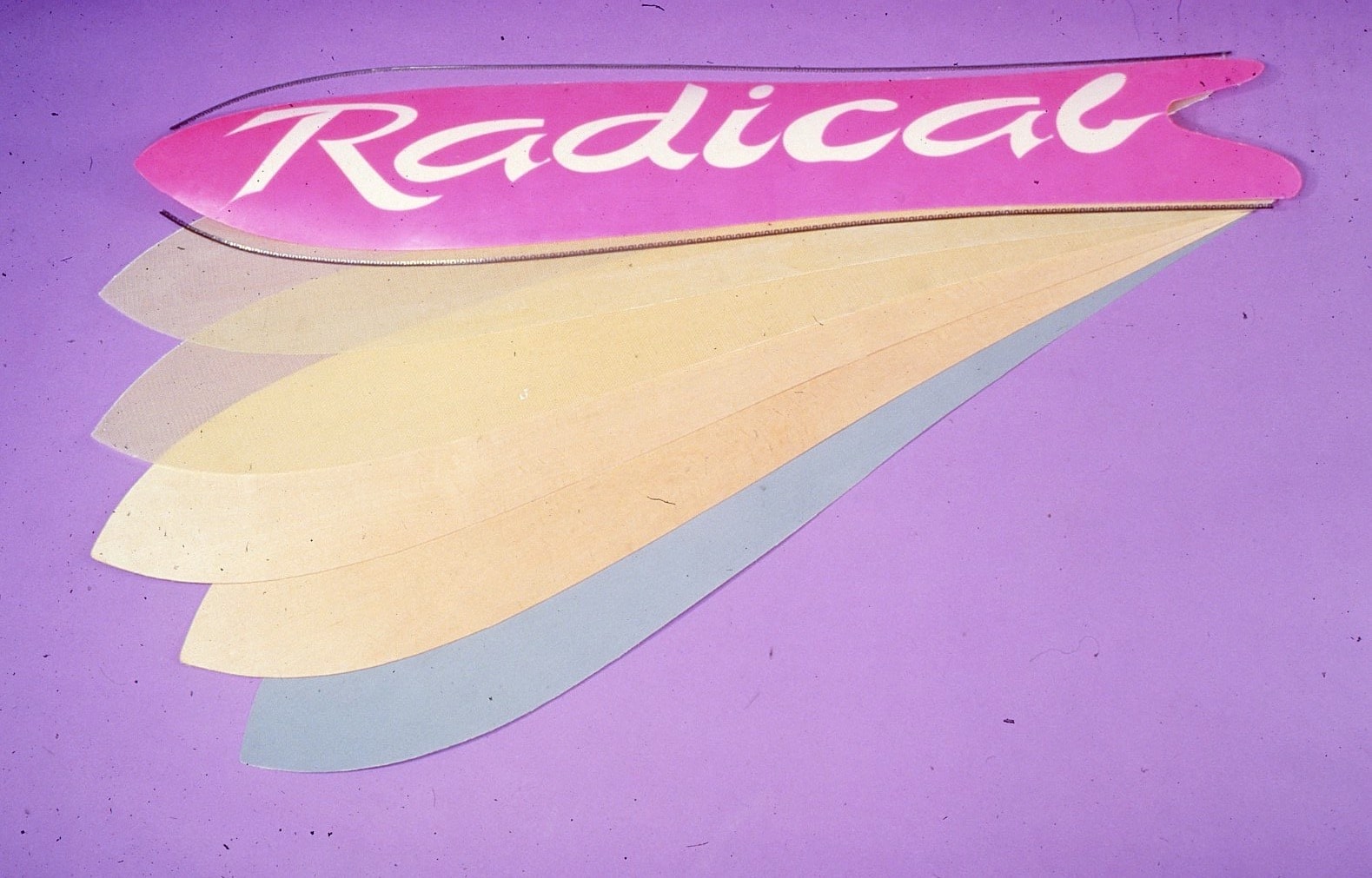
First snowboard with base and steel edges
That same year, Radical developed the first fiberglass-wood sandwich board featuring a P-Tex running base and bonded steel edges, making riding on groomed slopes possible.
1986
First Swiss Championship in St. Moritz
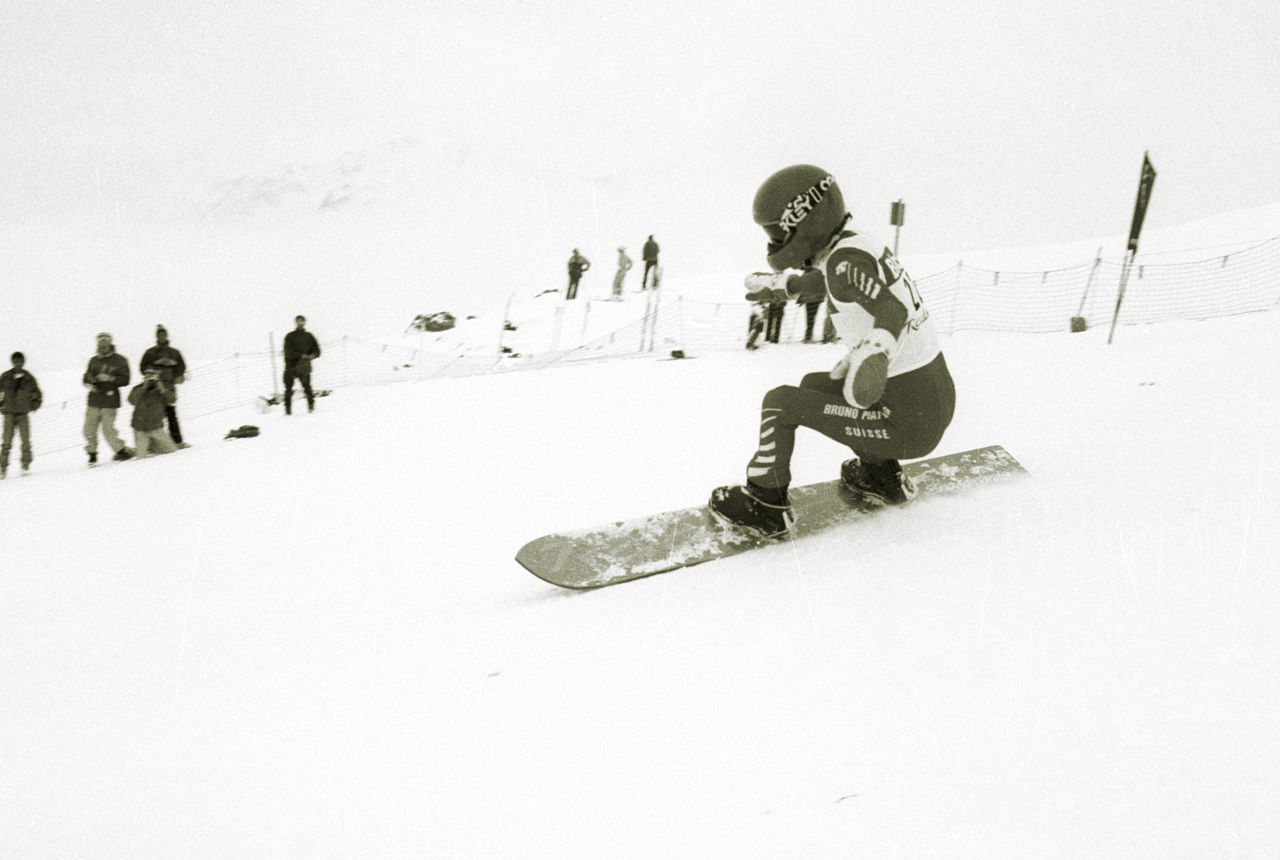
In February 1986, the Radical Snowboard Club Zurich organized the first international Swiss Snowboard Championships in St. Moritz.
Mark Farner competed actively until 1991, consistently ranking among the top ten throughout that period.
Snowboarding was banned almost everywhere at the time (with the exception of Hoch-Ybrig and Laax).
Radical in specialty retail
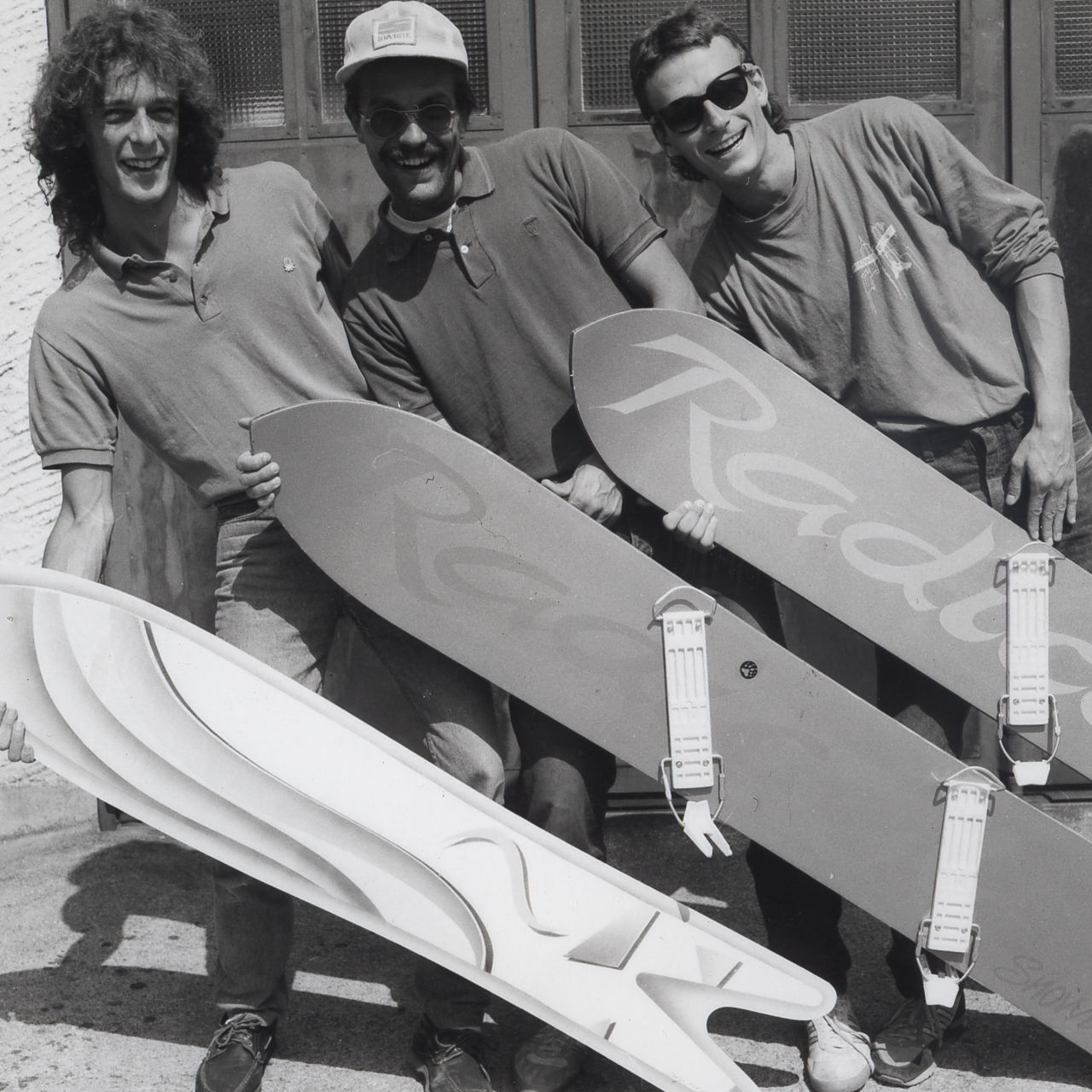
In 1986, Radical also began producing small production runs for Swiss specialty retailers. Working closely with selected specialty shops allowed Radical to respond quickly to market trends and establish itself as a pioneer in the Swiss snowboard market.
1987
RSCZ organizes first World Championship in St. Moritz
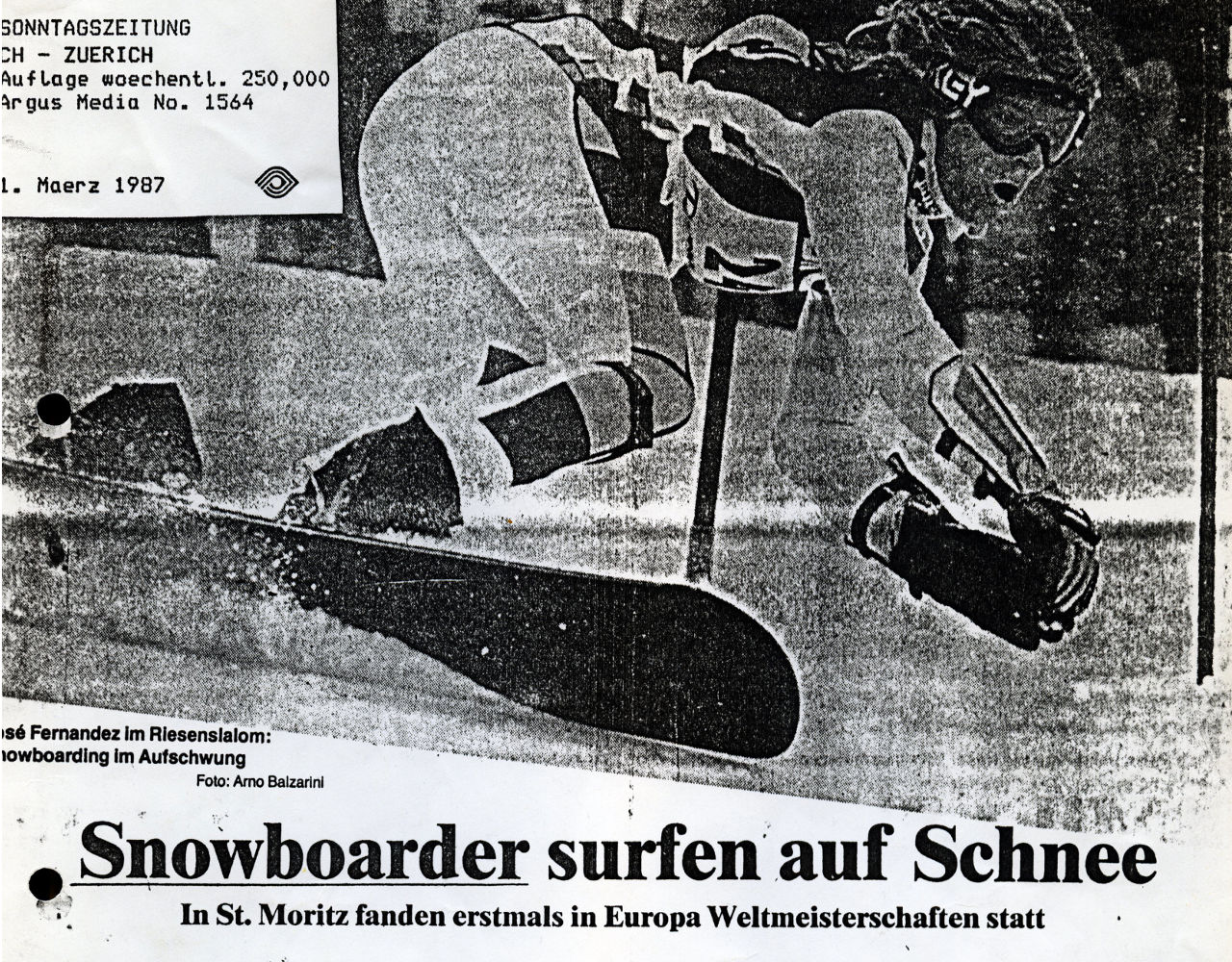
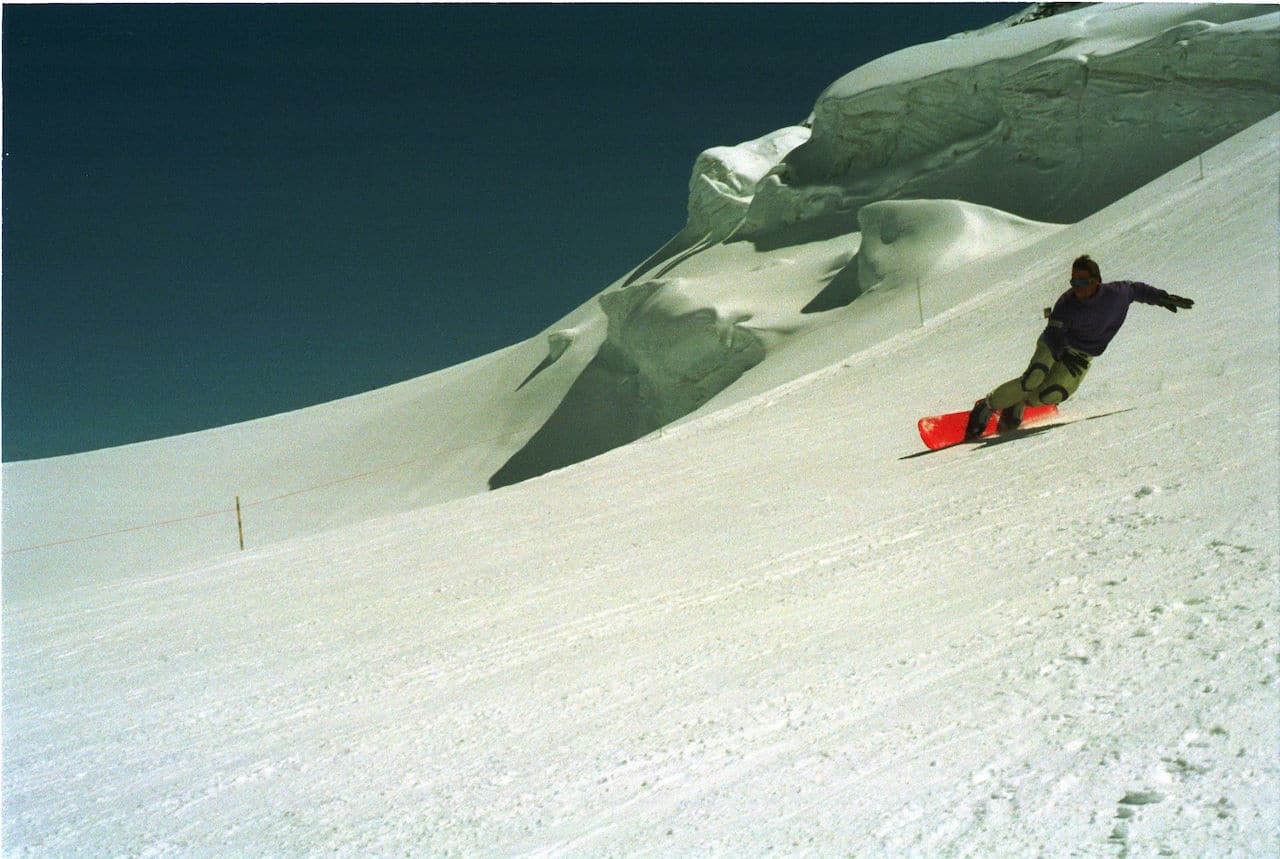
The Radical Snowboard Club Zurich organized the first world championships in which the entire world's snowboarding elite competed. The competitions took place in St. Moritz and Livigno. The giant slalom, downhill, special slalom and parallel slalom were held in St. Moritz, while the halfpipe and mogul slope competitions took place in Livigno. Mark Farner was the main organizer of this event and himself achieved an impressive third place in the downhill, where he competed with a 2-metre Radical board.
The event was supported by well-known sponsors such as the Blick newspaper and Swiss television. Blick and the Tages-Anzeiger reported regularly on the competitions. A key success of the World Championships was that almost all ski resorts in Switzerland were reopened to snowboarders after the event - with the exception of Zermatt and Arosa. The RCSZ had thus achieved its goal of making snowboarding more widely accessible in Switzerland again.
An overview of all winners can be found here.
Founding of SSBA and SSBS
In the same year as the World Championship, Mark Farner co-founded two major organizations in Swiss snowboarding: the Swiss Snowboard Association (SSBA) and the Swiss Snowboard Instructor Association (SSBS). The SSA was established to organize competitions and promote snowboarding in Switzerland. The SSBS, on the other hand, laid the foundation for professional snowboard instructor training and set new standards in education. Through his active involvement, Mark Farner played a decisive role in developing and establishing snowboarding across Switzerland.

1988
Radical builds for top athletes worldwide
Radical Sports specialized in crafting custom snowboards, which were also ridden by competitors representing other brands such as Sims, Nidecker, Vision, and Killer Loop. These boards contributed to multiple victories at international competitions, including achievements by athlete José Fernandez.
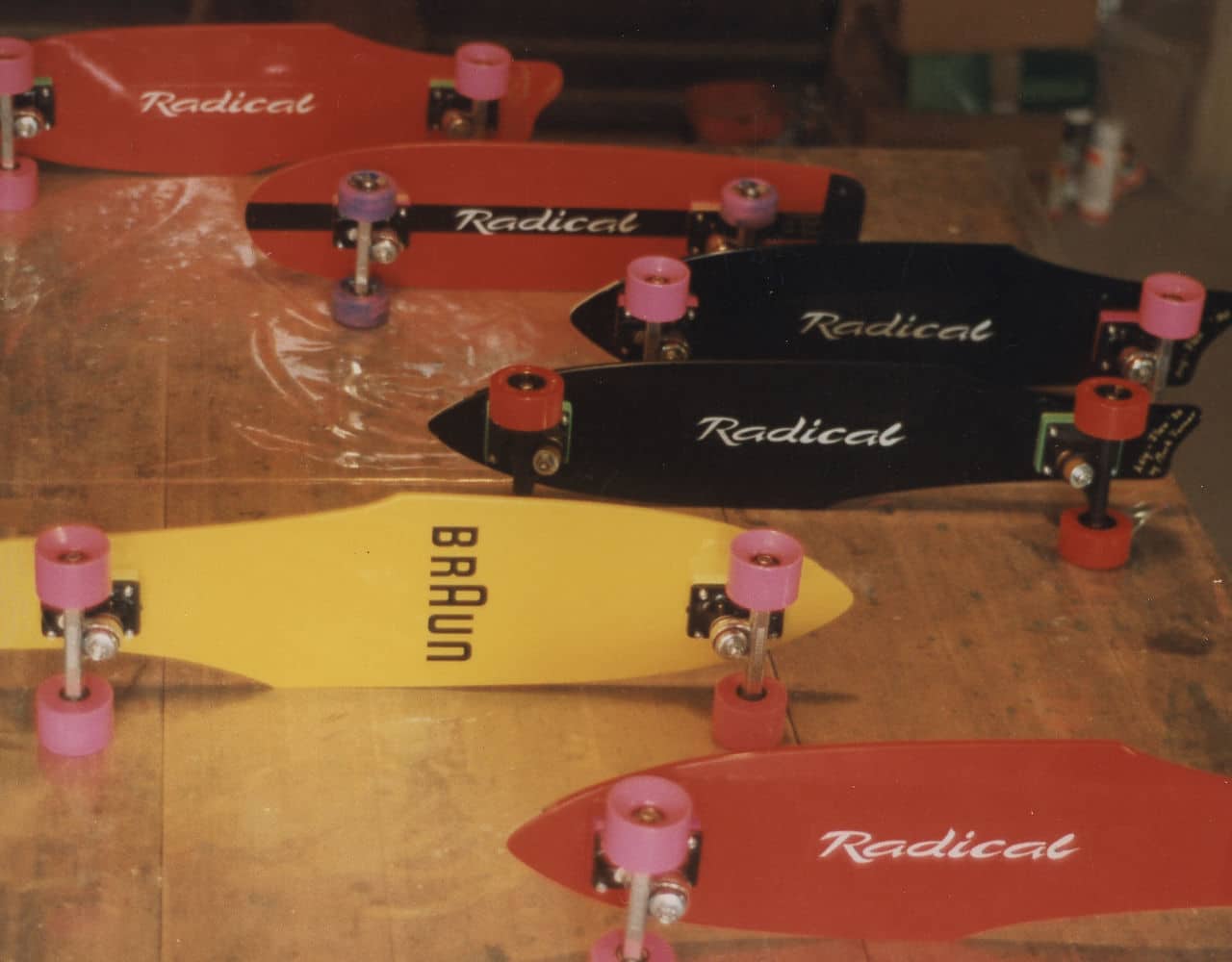
Radical Slalom Skates
The first skateboard collection was also launched in 1988.
The story of Radical Skateboards began back in 1976 when Mark Farner started slalom skating shortly after the first boards arrived in Europe. The skateboard soon became his daily means of transportation. From the beginning, he concentrated on slalom flexboards and entered the club and competition scene in 1980. He was particularly inspired by the skate club on the Landiwiese, the "Swiss Landsurf Association", where he later attempted his first turns in deep snow together with greats such as José Fernandes, Andi Tanner and Ruedi Matter.
From 1990, innovative developments such as the Asy-Flex and custom skates followed. In 1994, the longest flex skateboard in the world at the time was built with a length of 125 cm.
1990
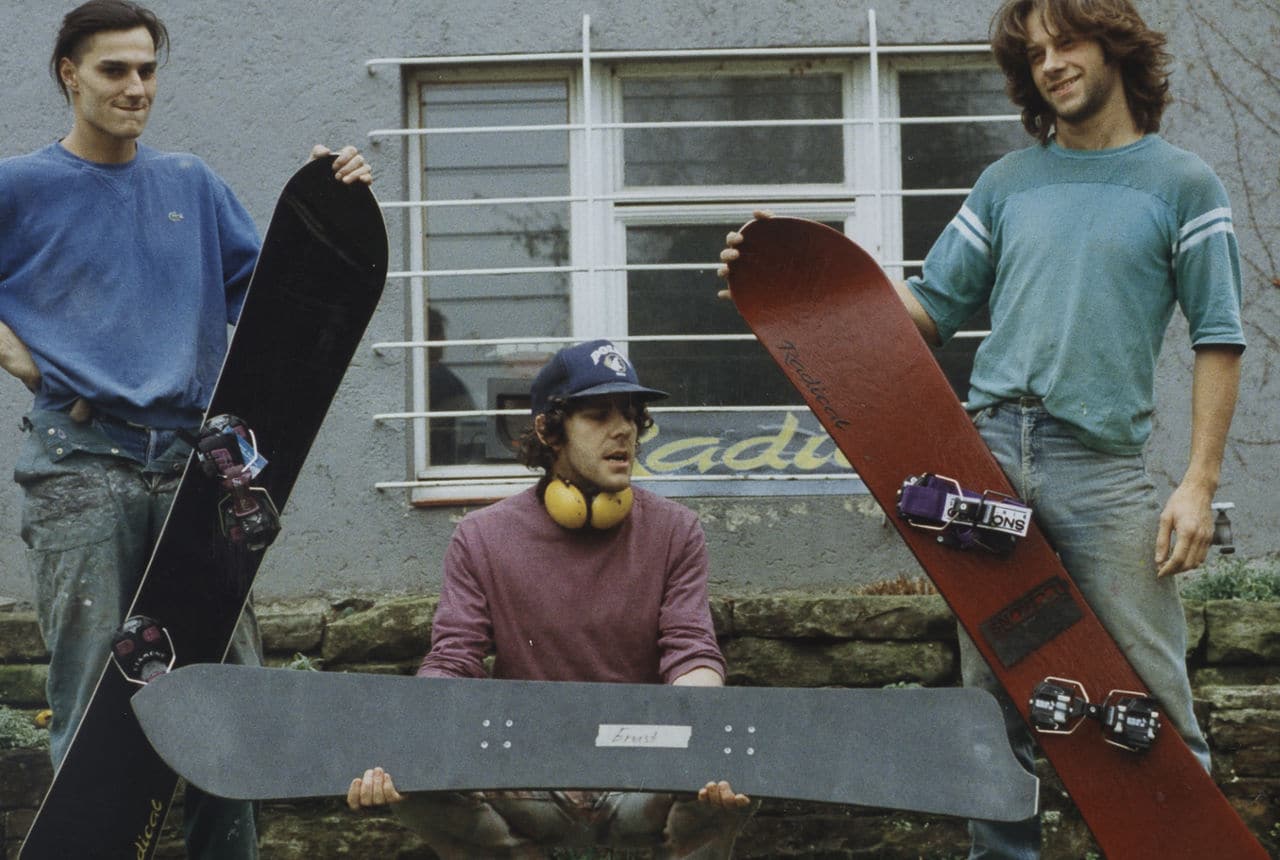
First Radical with carbon-Kevlar construction
Another major milestone was the first carbon-Kevlar construction. This marked the birth of our enduring hallmark: durable, highly dynamic boards.
Following comprehensive mechanical stress testing, it was proven that Radical's unique construction was ten times more durable than competing boards.
2000
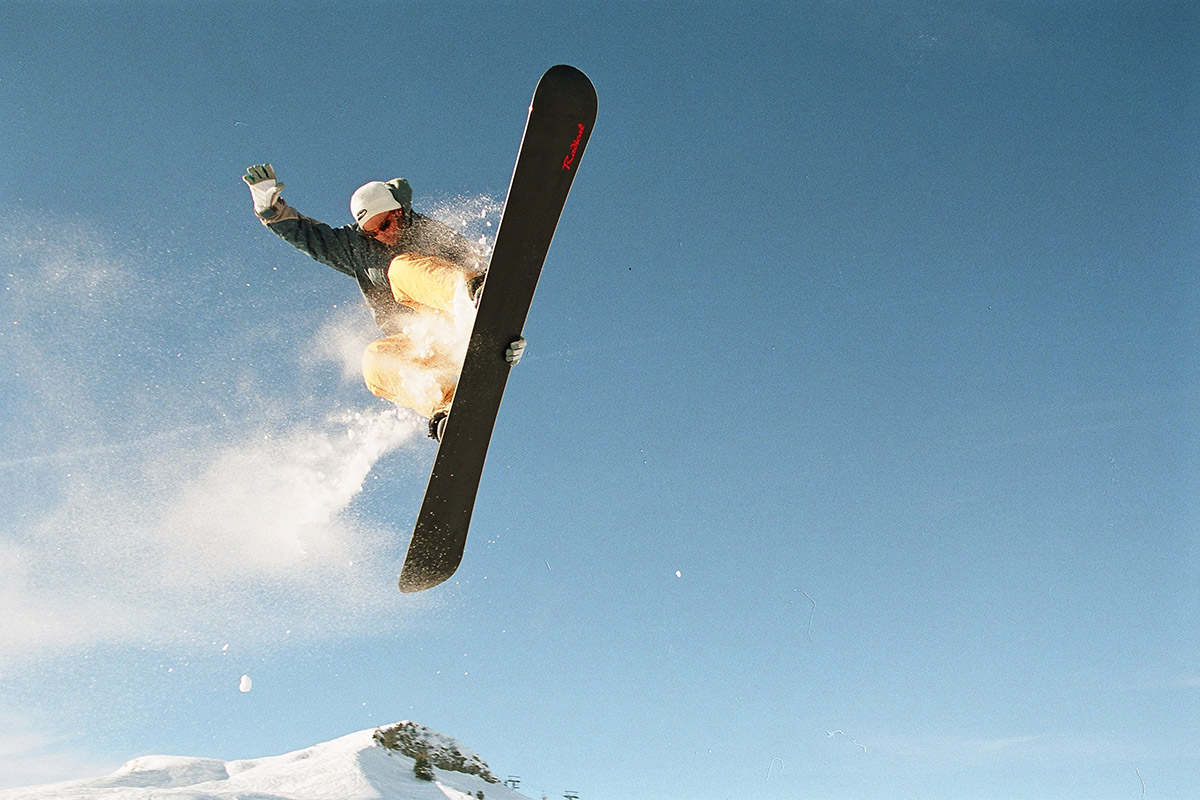
The longest board in the world
Following several one-off custom builds, the longest production snowboard in the world was born: the Surf 222cm.
Radical garnered widespread attention with this board, and even the German television network ARTE dedicated a feature to it. You can watch it in our media library.
2004
The birth of the Radical Ski
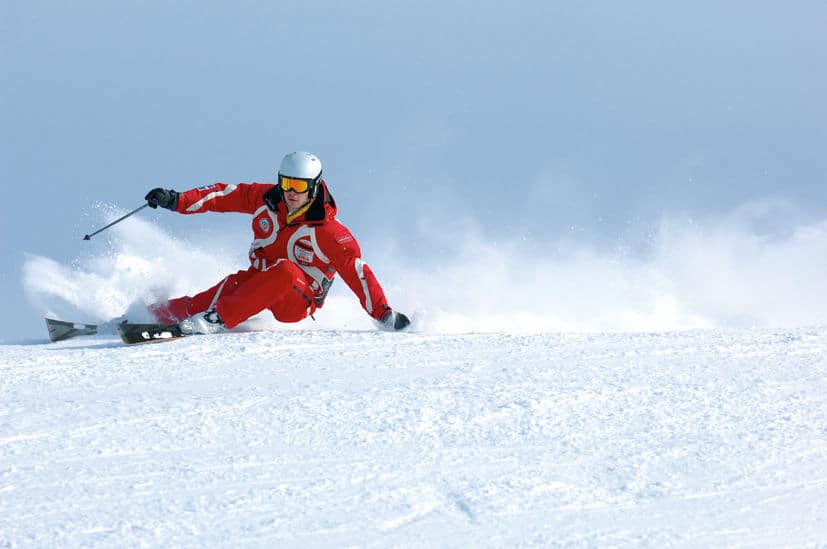
The range was expanded to include skis and the first collection appeared. This was a response to the growing demand from snowboarders who also wanted to ski.
The very first series ski from Radical, the "Radical Ski", was a twin-tip ski designed for all-round use and focused on carving, freestyle and freeride.
The skis were developed in close collaboration with numerous ski instructors and the owner of the Davos sports store Top Secret, Edy Van de Kraats. Edy, a former World Cup skier, contributed his extensive experience to the process.
Over time, the focus shifted more towards carving and freeride, and the collection grew continuously. A milestone was the introduction of the Race Carver ski in 2012, which is still the bestseller today.
Fun fact: Another reason for developing the skis was that Mark was fed up with lugging around his girlfriend's heavy rental skis.
The well-known Radical lightweight construction was therefore also applied to the skis.
2012
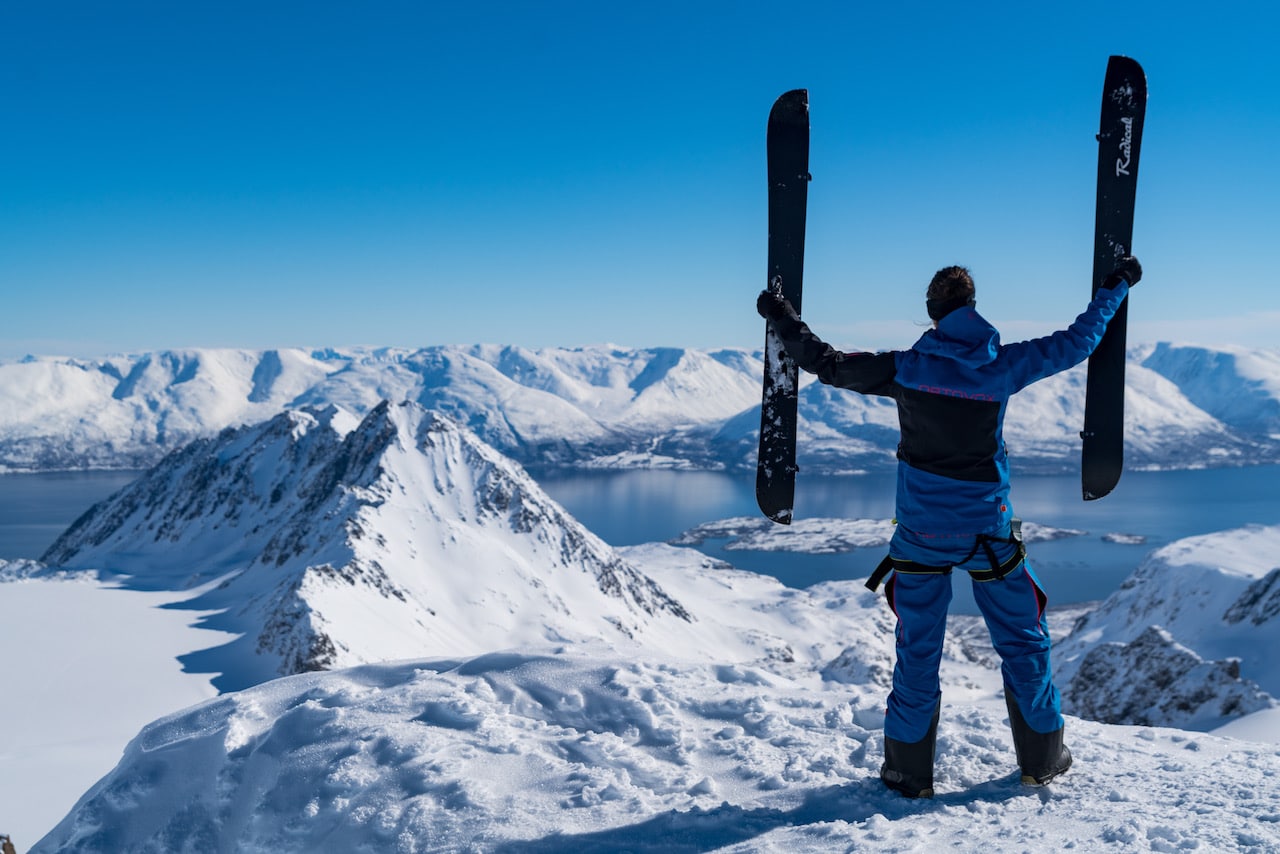
"Earn your turns" with Radical splitboards
Splitboarding had already been around for a while, but binding systems were far from mature. That was about to change: Radical launched the Lion, an outstanding splitboard that was an instant hit.
2013
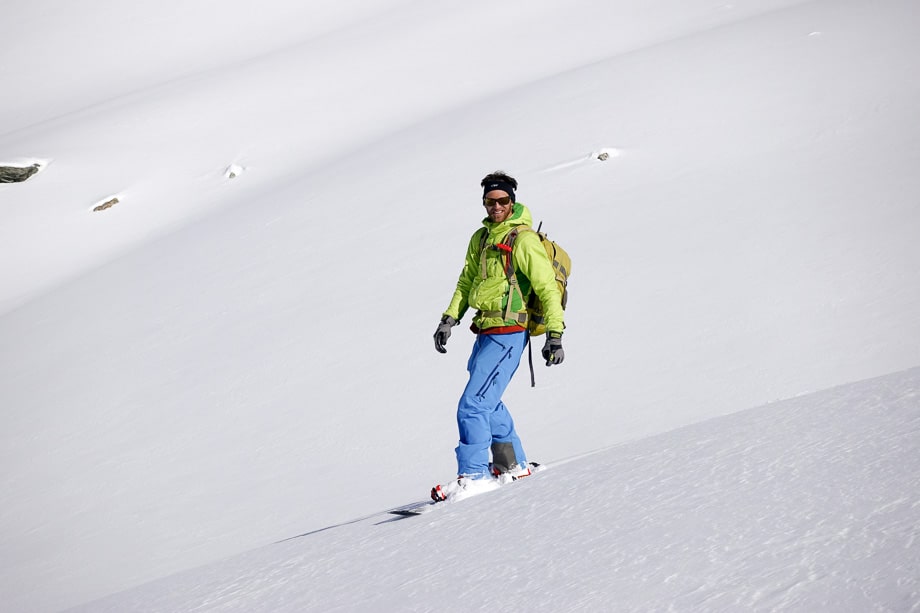
Guided Tours
Led by professional guide Niki Huwyler, guided splitboard tours were introduced to promote the sport and provide riders with a safe, confident entry into splitboarding. This hit the pulse of the times, and the tours were naturally fully booked right from the start.
2017
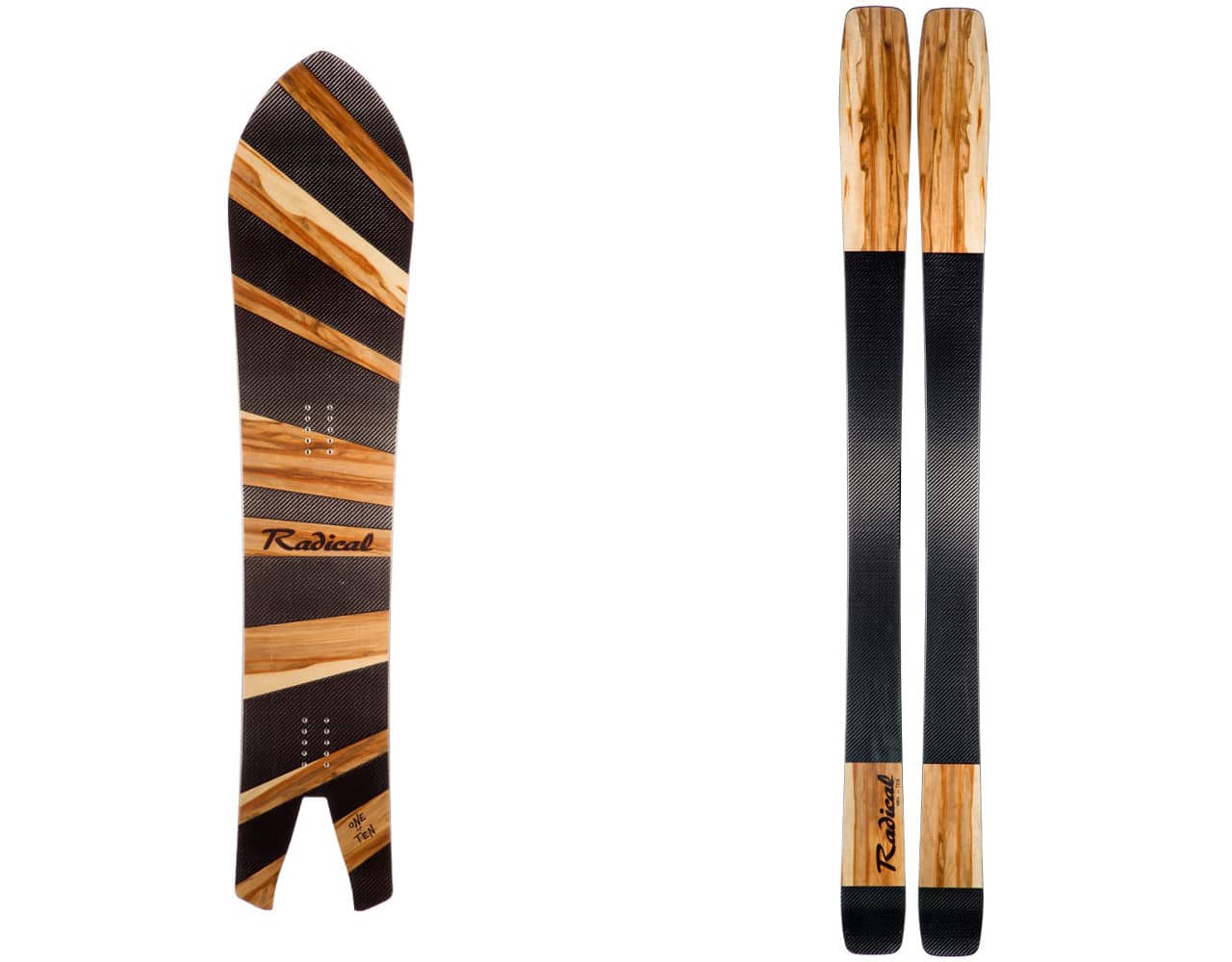
The One of Ten series is born
With the “One of Ten” series, unique snowboards and skis were created, released every year since in a strictly limited run of just 10 pieces. Each model is a one-of-a-kind creation—a single length, an exclusive design, and never reproduced.
You can explore the full series overview here.
2024
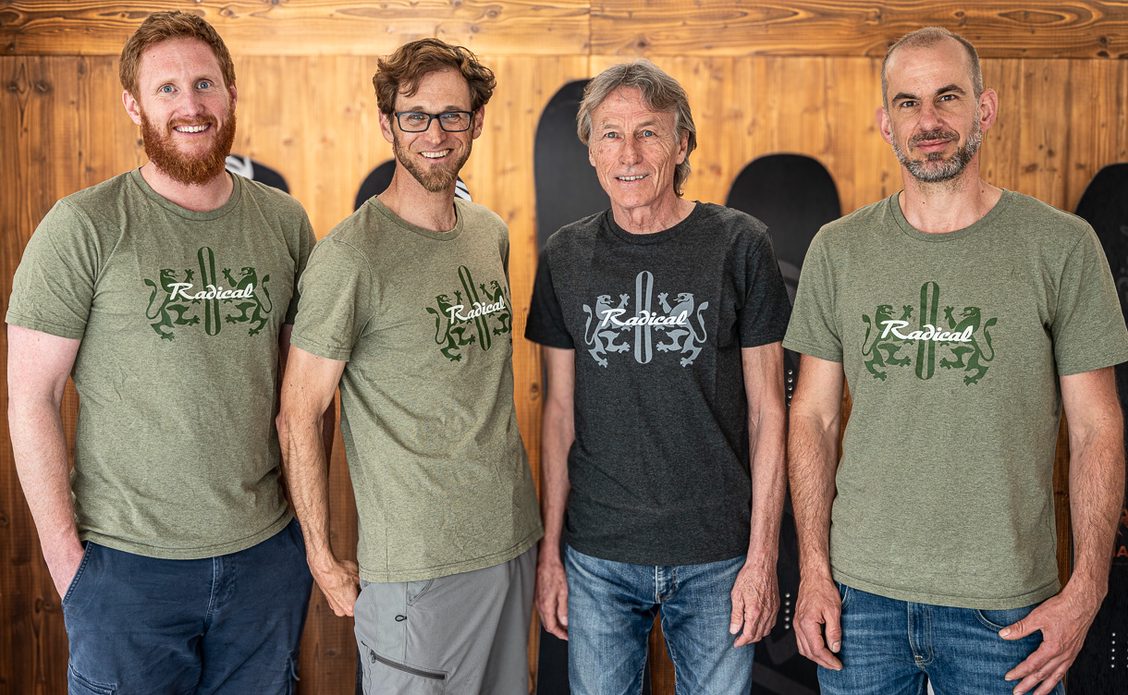
Long-standing employees take over the company
A new chapter in the company's history began when the company was taken over by long-standing employees Niki Huwyler, Florian Hösli, Patrick Stauber and Dominic Richard. They are now running the company with great passion and in the tradition of the original values. Their aim is to preserve and further develop the spirit and innovative strength that characterize Radical.
Founder Mark Farner will remain with the company as a valuable employee and support the team with his experience and vision. This continuation underlines the consistency and cohesion within the company, while at the same time bringing a breath of fresh air and new ideas.
2024
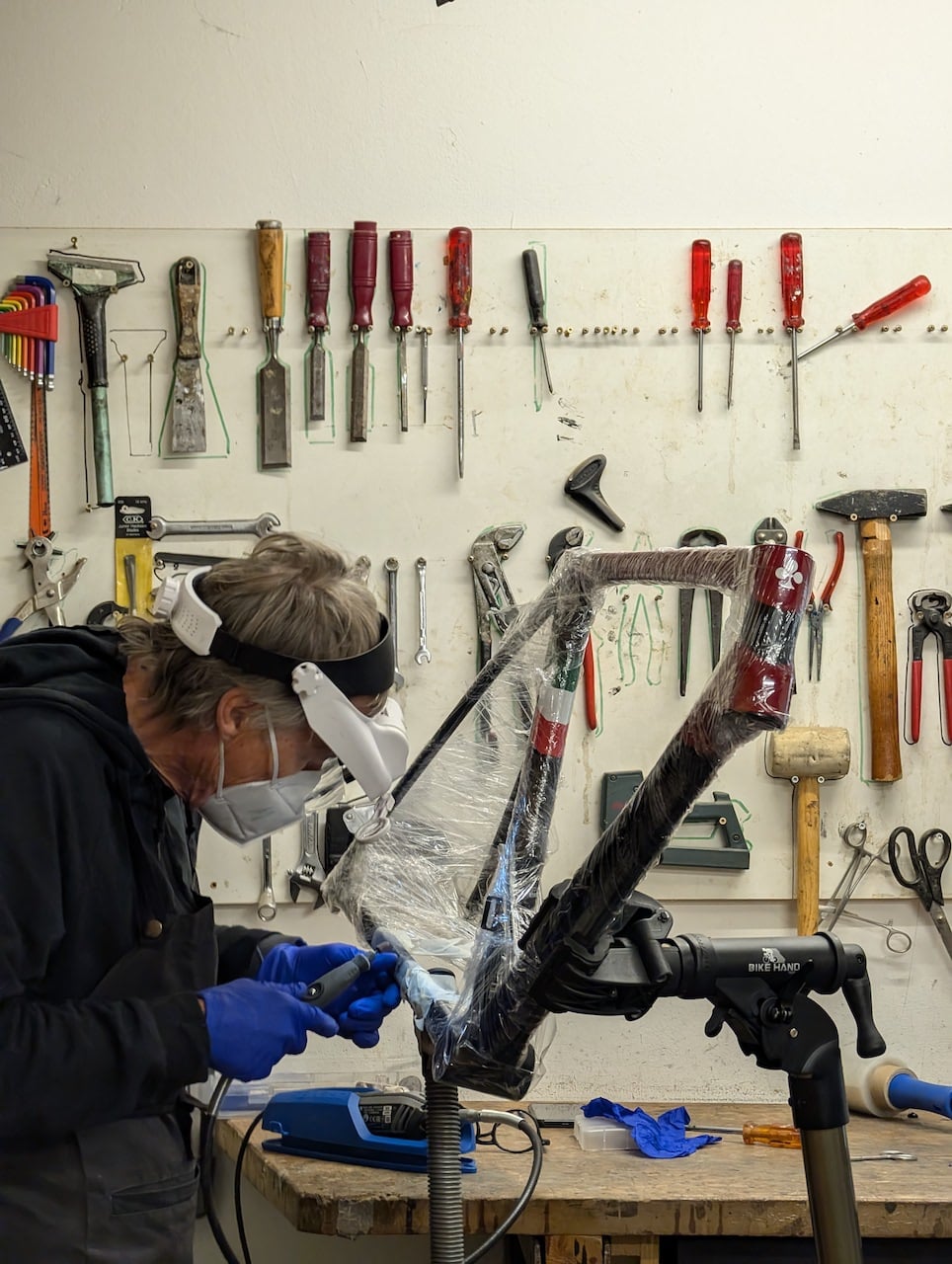
Carbon repairs for a second life
We are continuing to expand our services with expert carbon and fiberglass repairs. What many don't realize: damaged carbon components can often be repaired. To do this, we combine our extensive experience in board building with advanced repair techniques from aircraft manufacturing. In our Zurich workshop, we give bike frames, sports gear, and other components a second life—actively contributing to sustainability by preserving resources and avoiding waste.