
We are very pleased to welcome Bruno Baeza, one of the first workshop employees at Radical, for an interview. With his tireless commitment and creative ideas, he played a decisive role in shaping the company from 1989 to 1996. Especially in those early years, Bruno played a central role in the workshop and contributed significantly to the success of Radical.
In an exclusive conversation, Bruno gives us exciting insights into the beginnings of snowboarding, his personal highlights, and the development of the scene over the last few decades.
Look forward to inspiring stories and anecdotes from the time when snowboarding was still a crazy adventure.

Caption: Bruno Baeza – Head of Workshop between 1989 - 1996
... Due to a large order from Sims, Mark asked me if I could support him on this project ...
Please introduce yourself.
I am Bruno Baeza, born in 1967. I am married and have two adult children.
When and how did you come to Radical?
I came to Radical in 1989. It started with a large order for the snowboard brand Sims. Mark asked me if I could support him on this project, as I had already built several boards for myself. Originally, I trained as a plumber, but my passion for snowboards eventually led me into this industry.
Note: Sims is a company founded in 1976 by Tom Sims, considered one of the first skate and snowboard brands, which significantly influenced the technical development of snowboarding through innovative products. At that time, Sims was the coolest brand on the market, with the most beautiful shapes and the best boards. On behalf of Sims, Radical manufactured numerous snowboards for Sims pro riders between 1989 and 1992, as the Swiss were superior to the Americans in technical know-how at that time. Back then, about 50% of all podium finishes were won on boards manufactured by Radical – even though the Radical name was not on them.

Caption: Bruno proudly presents a custom-made Radical snowboard in bright yellow.
What was it like in the workshop back then?
During that time, we mainly built fully asymmetrical boards that were cold-pressed. The pressure distribution of the upper press cover and the first heating mats, which we made ourselves, posed a challenge. Everything was produced in Mark's grandmother's basement, which worked surprisingly well.
Note: Asymmetrical snowboards were developed to optimize riding characteristics specifically for regular and goofy riders. Nowadays, such boards are hardly produced anymore, as symmetrical boards represent an optimal compromise for both riding styles.
Were there any special projects or innovations you worked on during your time at Radical?
One of the particularly exciting projects was the production of the first small series of about 50 boards. We faced the challenge of optimizing the entire production process so that manufacturing became significantly faster without making a single compromise on quality. In the end, we succeeded in producing the series successfully while maintaining the high standards for our boards.
Another groundbreaking innovation we introduced was the so-called Cap system. In this process, the top layer was vacuum-pressed to protect the sensitive sidewalls of the boards from damage. But that required some ingenuity: to implement the necessary vacuum technology, I built a vacuum pump – using an old refrigerator compressor.
Note: Cap construction in snowboard building means that the top layer is pulled down the sides to the bottom layer. This creates a uniform, closed construction that gives the board more torsional stiffness.
Torsional stiffness describes a board's resistance to twisting around its longitudinal axis. A snowboard with high torsional stiffness remains stable even under load and offers more precise edge control, especially in turns or at higher speeds. This characteristic is crucial for riders who value speed, direct edge changes, and high stability.
What has changed the most in production and craftsmanship since the early days?
In terms of construction, especially when talking about a sandwich product, not much has really changed. The basic principles have remained the same, which also shows how good this concept was from the start.
But what I really miss is the spirit of optimism of those early days when snowboarding was still in its infancy. There were no fixed rules, no established standards – everything was in flux. Every idea, every small improvement could change the sport a little bit, and often enough you were the first to try something completely new. Whether it was optimizing pressure distribution, combining materials differently, or experimenting with innovative shapes – it felt like you constantly had the chance to make history.
Note: Sandwich construction is the established construction method in snowboard and ski building. It uses a wood core reinforced with a top and bottom layer of several layers of different fiber materials such as fiberglass, carbon, Kevlar, etc. These layers are placed on top of each other in a precisely coordinated structure and firmly glued together with epoxy resin. The result is a stable, durable, and high-performance piece of sports equipment that retains its original shape for a long time.

Caption: Mark Farner and Bruno Baeza during a large order for Sims Snowboards, approx. 1990.
Is there a special story from your time as Head of Workshop that has always stuck in your memory?
Yes, there are many special moments that I remember. Every day in the workshop was exciting and brought new challenges. It's hard to highlight one story in particular, because it was the sum of all these experiences that made the time at Radical so special.
From tinkering with new ideas that no one had tried before to the moments when we managed to solve complex production problems – all of that showed me how unique those early days were.
Particularly exciting were the moments when we were able to successfully implement new technologies or production processes that pushed us and snowboarding further forward.
... Snowboarding still plays an important role in my life ...
Do you still work with your hands or with snowboards today?
Yes, I still do manual work. I build a snowboard for myself about every five years. Snowboarding still plays an important role in my life – I'm out on the snow for about 14 days every year.

Caption: Bruno and workshop employee Thomas Tischhauser present an exclusive small series of freshly lacquered custom snowboards.
Would you like to send a message to the company for Radical's 40th anniversary?
Personally, I think it's very nice that you're still around after so many years and I hope it continues that way… 🙂
Thank you very much for the interview, Bruno!

Caption: Bruno Baeza – still makes a snowboard for himself every five years.
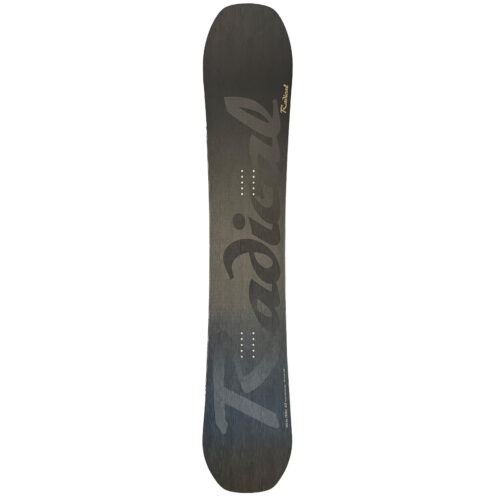
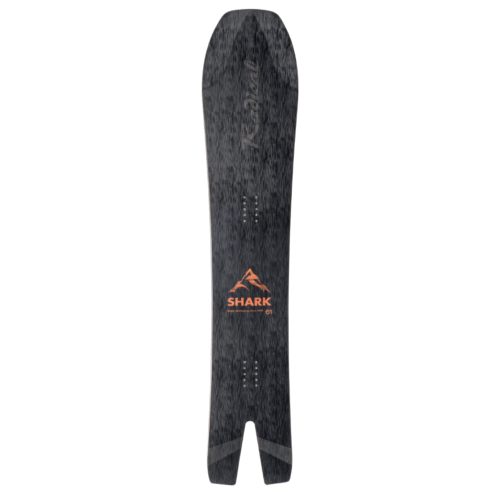
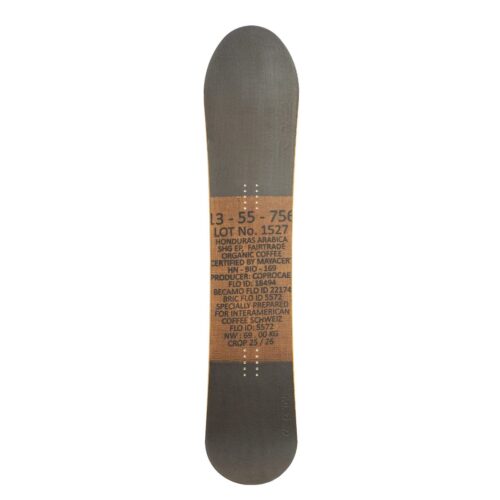
And this is what our current snowboard collection looks like




Radical Legends: Our story, told by those who shaped it
For our 40th anniversary, we have embarked on a journey into the past and visited some selected Radical legends from our eventful history.
With great pleasure, we invite you to dive into history with us and relive the special moments. We will be publishing more exciting conversations until the end of winter – so stay tuned and be inspired!


